
This week, we have a webinar from the Interagency Working Group on Cooperative Development looking at the potential for cooperatives to assist people returning from incarceration.
Then, Ella Fassler writes about how the new generation of digital time banking applications is helping spread the solidarity, and some of the road blocks to wider adoption that still remain.

Co-ops After Incarceration
by NCBA CLUSA
This webinar focuses on how cooperatives can help those returning from incarceration to re-integrate into their communities. After an introduction by Dr. Jessica Gordon-Nembhard, case studies of two such co-ops are presented — The Compost Cooperative in Greenfield, MA, and Collective Remake in Los Angeles, CA.
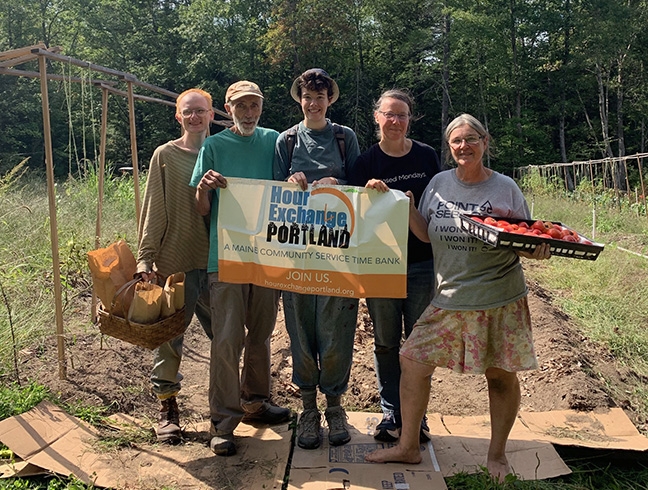
Digital Tools Are Fueling the Rise of New “Time Exchange” Solidarity Economies
by Ella Fassler
“The time bank usually has a need for healthy young men,” laughed Dawn Albright, president of the Kent Community Time Bank’s board of directors. “I would say, 70 percent of the members are older women.” Younger immigrant members of the time bank often offer assistance with household tasks, like carrying heavy things up the stairs. She recalled a story of members rallying to help a woman in her 50s who had to leave her home on short notice. They moved boxes, painted walls and stripped floors to make her fixer-upper livable. In return, Albright said, immigrants often request help with navigating challenging systems, like health care appointments.

New loan product expands credit access for Brooklyn worker co-ops
Next City — Brooklyn Cooperative has long punched far above its weight as one of the most active small business lenders in Brooklyn. Now it’s simply applying that same cash flow-based small business underwriting expertise to worker-owned cooperatives. The credit union rolled out its loan product for worker-owned cooperatives in late 2024, offering term loans and lines of credit up to $100,000 without the need for a personal guarantee...
Local governments tap worker cooperatives for services in depopulated areas
The Japan Times — These enterprises are more likely to employ young people, reach underserved populations and reinvest their profits locally. Across Africa, social enterprises are already operating at scale and delivering measurable outcomes. Babban Gona, in Nigeria, is a farmer-owned cooperative model serving more than 38,000 smallholders, has doubled yields, tripled incomes and created over 82,000 jobs – 69% for youth. Its 98% loan repayment rate outperforms most banks...
Canadian Worker Co-op Federation ED Retires After 30 Years
Canadian Worker Co-op Federation — After 30 years as CWCF’s Executive Director and involvement from its early beginnings in 1991, I have decided to retire from CWCF at the end of 2026. It’s an emotional decision, but it also feels very right. With a new cycle of Strategic Planning beginning, it’s the right time for new leadership...
What’s It Like to Coordinate a Mutual-Aid Network in Minneapolis?
Harper's Bazaar — These enterprises are more likely to employ young people, reach underserved populations and reinvest their profits locally. Across Africa, social enterprises are already operating at scale and delivering measurable outcomes. Babban Gona, in Nigeria, is a farmer-owned cooperative model serving more than 38,000 smallholders, has doubled yields, tripled incomes and created over 82,000 jobs – 69% for youth. Its 98% loan repayment rate outperforms most banks...

Like what you find on GEO?
Make a Donation Today!
Your tax-deductible contribution ensures that GEO can continue to provide independent grassroots content about the cooperative and solidarity economy movements.
Got something to say?
Let us know. Send your comments, suggestions, rants and article submissions to editors@geo.coop.
Follow us on Social Media
Mastodon: social.coop/@GEO_Collective
BlueSky: @geocollective.bsky.social
FB: facebook.com/GEOCollective
Instagram: instagram.com/grassrootsecon
Our mailing address is:
Grassroots Economic Organizing
P.O. Box 115
Riverdale MD 20738-0115
