
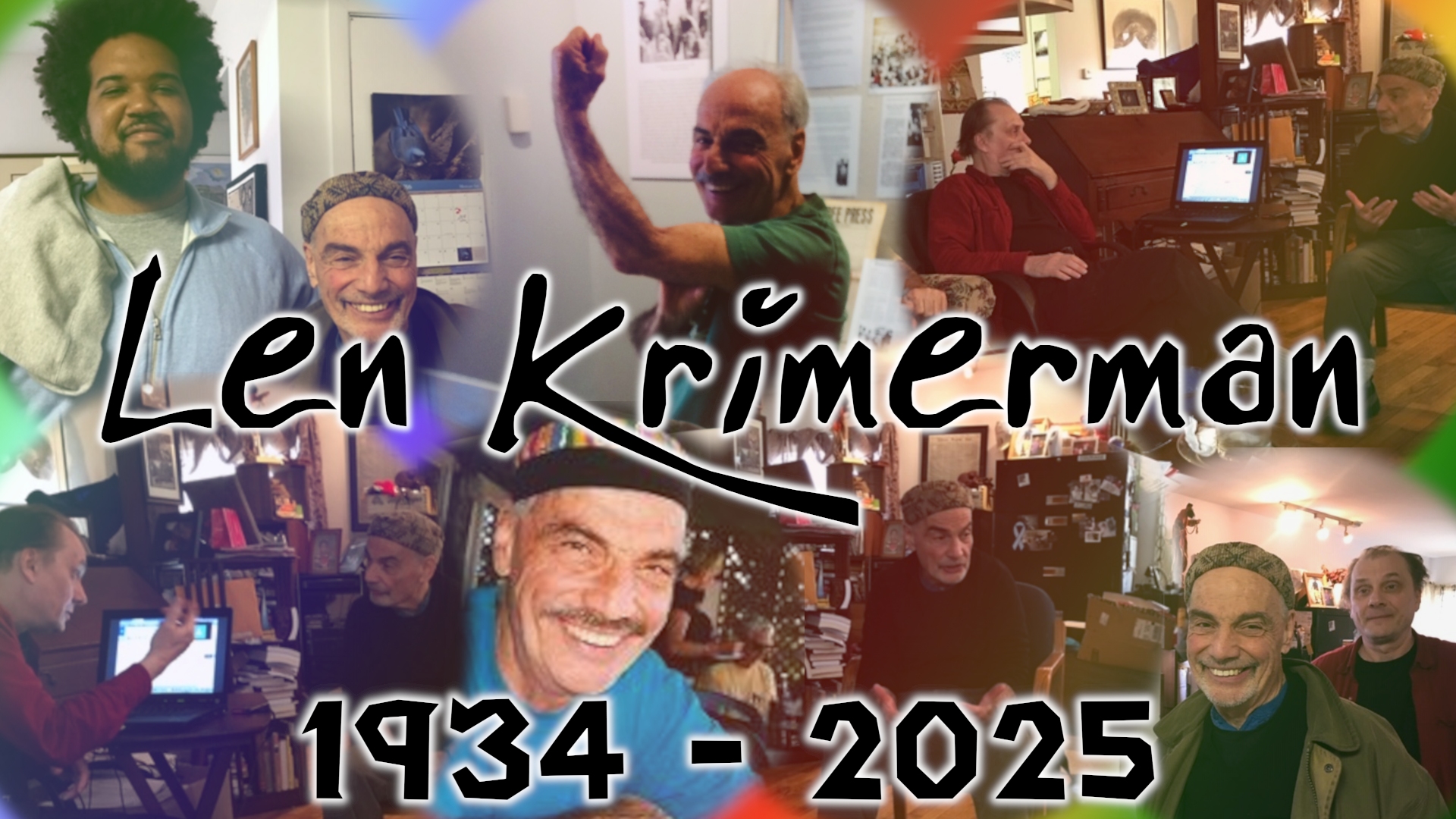
Late last year GEO lost our last founding member, Len Krimerman. Len was a great educator, mentor, and cooperator who will be greatly missed by all who were blessed to know him. This week, his wife Marian writes about Len's six decades or work dedicated to the ideals of social and economic justice (later this week we'll be sharing GEO members' reflections on Len's life and work).
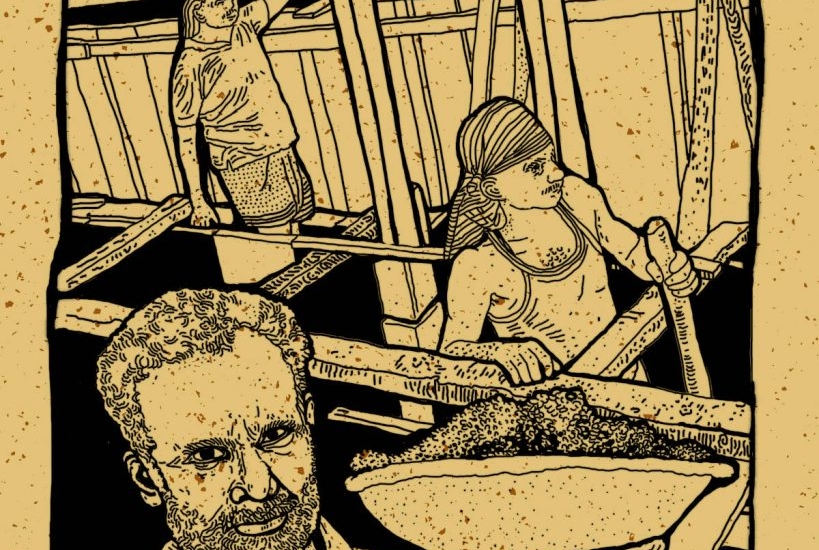
Then, Najeeb VR writes about Asia's largest workers' cooperative, the Uralungal Labour Contract Cooperative Society (ULCCS). Founded in 1925 in Kerala, India, the co-op today has expanded their scope from construction labor to housing, education, arts and crafts, tech, and materials testing and research.
Remembering Len Krimerman
by Marian Vitali
Where does one begin to honor Leonard Krimerman, whose life’s work spanned six decades. He was dedicated to ideals of social and economic justice, the importance of human dignity, and the power of people from all walks of life to develop democratic capacities in shaping their own education, workplaces, and governance. He helped put these building blocks in place to nurture imagination and grow the dreams of many.
The Uralungal Labour Contract Cooperative Society
by Najeeb VR
From its origins amongst a group of labourers, ULCCS, located in a rural part of Malabar in northern Kerala, now constructs roads and bridges, buildings, and software systems. The cooperative’s commitment to social harmony and inclusion as well as worker cooperation has allowed it to succeed in areas of social production that are often challenging for cooperatives.
Integrating Healing Justice into Worker Cooperative Counseling
Fordham Urban Law Journal — Unaddressed trauma among workers negatively impacts their experience in the workplace, including the cooperative workplace. While lawyers who counsel worker cooperatives may develop conflict resolution tools, they far less commonly provide resources for responding to worker trauma that can, and often does, lead to conflict in the first place. Trauma has become an increasingly pervasive topic in the post-COVID-19 workplace...
Trust as the mechanism of voluntary coordination at scale
Global Ecovillage Network — We often speak of trust as something that develops over time: as a reward for reliability or a product of shared experience. And right there is the challenge that every movement for economic transformation faces: this kind of trust is intimate. It forms in small circles, between people who have shared meals. Work done in council circles, in conflict resolution processes, in transparent governance, all of this is trust-infrastructure. The architecture on which anything else can be built. And yet the economic systems that are destroying the world operate on a planetary scale. How do we translate the deep trust of a small community into a force that can reorganize a civilization?...
Commoning in the Basque Country
Growing the Commons — Interview with Unai Gaztelu of Txirrin (pronounced 'chirrin') - a group looking to launch a housing commons project in the Basque country, but first, they're practising with bicycles and cars!..
The Spotify AI Blues
Mirlo Co-op — In 2023 some of the Mirlo founders wrote this think piece about the future of AI in music and how Spotify and others will use it. We're re-posting it because two and a half years later it has held up surprisingly well...

Like what you find on GEO?
Make a Donation Today!
Your tax-deductible contribution ensures that GEO can continue to provide independent grassroots content about the cooperative and solidarity economy movements.
Got something to say?
Let us know. Send your comments, suggestions, rants and article submissions to editors@geo.coop.
Follow us on Social Media
Mastodon: social.coop/@GEO_Collective
BlueSky: @geocollective.bsky.social
FB: facebook.com/GEOCollective
Instagram: instagram.com/grassrootsecon
Our mailing address is:
Grassroots Economic Organizing
P.O. Box 115
Riverdale MD 20738-0115
