
This week, we've got the penultimate chapter of Luis Razeto Migliaro's Cooperative Enterprise and Market Economy, in which the author explains how a democratic market might function and how it can be achieved in spite of the forces of monopoly and centralization.
Then, members of four worker cooperatives in the creative arts field talk about why they choose the co-op model, and how cooperative business models benefit creative workers.

Cooperative Enterprise and Market Economy: Chapter 19
by Luis Razeto Migliaro, transl. by Matt Noyes
The development of a broad cooperative sector has, from the standpoint of the dispersal necessary for the “perfecting” and democratization of the market, a double effect: by autonomizing the subordinated categories it reduces the capital’s extraordinary profit margins, counteracting the process of capitalist accumulation and concentration. At the same time, by creating new possibilities of development of cooperatively organized categories, it leads to their growing dispersal, thus rendering unnecessary their defensive subordinated organization.
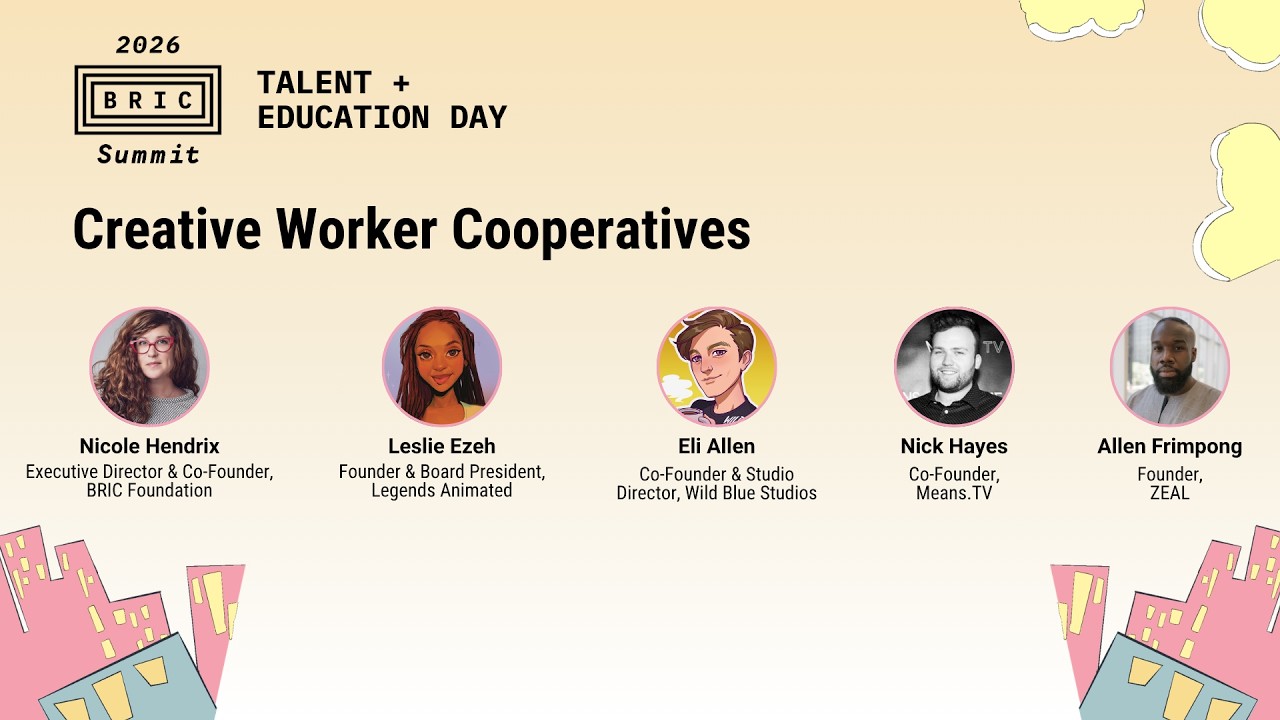
Creative Worker Co-ops
by BRIC Foundation
A worker cooperative is a business that is owned and controlled by its workers. It is an underused model in the cultural industry that channels the creative power and freedom of the workers to build a world grounded in solidarity. Join us in this discussion on how Creative Workers Cooperatives function and how you can make one too!
A Growing Market: Worker Cooperative Transitions For CPAs And Tax Advisors
K2 Enterprises — “You can stand out in a competitive market by specializing in a growing, niche field,” Bill said. “It also helps with client attraction and retention,” Rebecca added. “Coop clients are likely to refer other coops to you. You can also build long-term advisory relationships—unlike other exit strategies like selling to an outside buyer.” Bill explained that it’s also an opportunity to develop sustainable revenue streams, as you can monetize different aspects of a cooperative transition...
Emerging Themes From Conversations About Alternative Land Access
NOFA VT — NOFA-VT is deepening its support for collective land access and cooperative and alternative business models. After spending time in 2025 conducting dozens of one-on-one conversations with farmers around the state and holding conversations with partner organizations, this spring, we launched the Land Together Learning Network. This learning network is a ten-month-long cohort program designed to support land seekers and those with land to share in building financial, legal, and relational skills for successful collective projects...
Coop Exchange Announces Closure
Coop Exchange — Founded in 2020, Coop Exchange was established to build a regulated, technology-enabled capital-raising platform tailored to cooperatives and mutuals. The Company sought to address long-standing structural challenges in cooperative capital formation by combining regulatory approval, digital infrastructure and mission-aligned investment frameworks...The Company’s model required approximately £14 million of capital to meet regulatory, operational and market-entry requirements at a sustainable scale. This level of capitalisation proved beyond the mandate or allocation capacity of many mission-aligned investors, notwithstanding their recognition of the strategic value of the platform...
Quebec’s Bill 20 could impact access to housing co-ops
CBC News (YouTube) — Bill 20, tabled in February, is expected to make several changes affecting access to affordable housing in Quebec, including co-ops. It would make residents of housing co-operatives pay a penalty if their income rises past a certain threshold...
Worker cooperatives as an organizational alternative: Challenges, achievements and promise
Academia.edu — This special issue of Organization treats cooperatives as alternative forms of business and organization, focusing on worker-owned-and-governed forms. In reviewing extant research and considering the seven articles in this special issue, we treat five main challenges that workers' cooperatives face...
The Antidote to Despair Is Finding our Role in Community Building
Ms. Magazine — In my daily life and organizing, I encounter people of various ages and backgrounds who feel stuck or unsure of what to do in this America. That’s when I recall Mr. Rogers’ wise words: “Look for the helpers”—particularly, the helpers most impacted and closest to the issues...
Like what you find on GEO?
Make a Donation Today!
Your tax-deductible contribution ensures that GEO can continue to provide independent grassroots content about the cooperative and solidarity economy movements.
Got something to say?
Let us know. Send your comments, suggestions, rants and article submissions to editors@geo.coop.
Follow us on Social Media
Mastodon: social.coop/@GEO_Collective
BlueSky: @geocollective.bsky.social
FB: facebook.com/GEOCollective
Instagram: instagram.com/grassrootsecon
Our mailing address is:
Grassroots Economic Organizing
P.O. Box 115
Riverdale MD 20738-0115
