
This week, Bernard Marszalek reviews the new book Worker Cooperatives and Deep Democracy: Transformative Politics and Planetary Care from Below by Vishwas Satgar and Michelle Williams, and details a few of the many cooperatives profiled in the book.
Then, P.J. Christabell and Caroline Shenaz Hossein write about the many types of informal member-owned institutions in India's Kerala state, based on surveys of over 1,200 members of such groups. Their findings underline the value of citizen engagement in improving social equity and creating inclusive economic development.
And if you are a member of a worker co-op, please take a few minutes to complete this anonymous survey about if and how your cooperative is us "AI" tools.
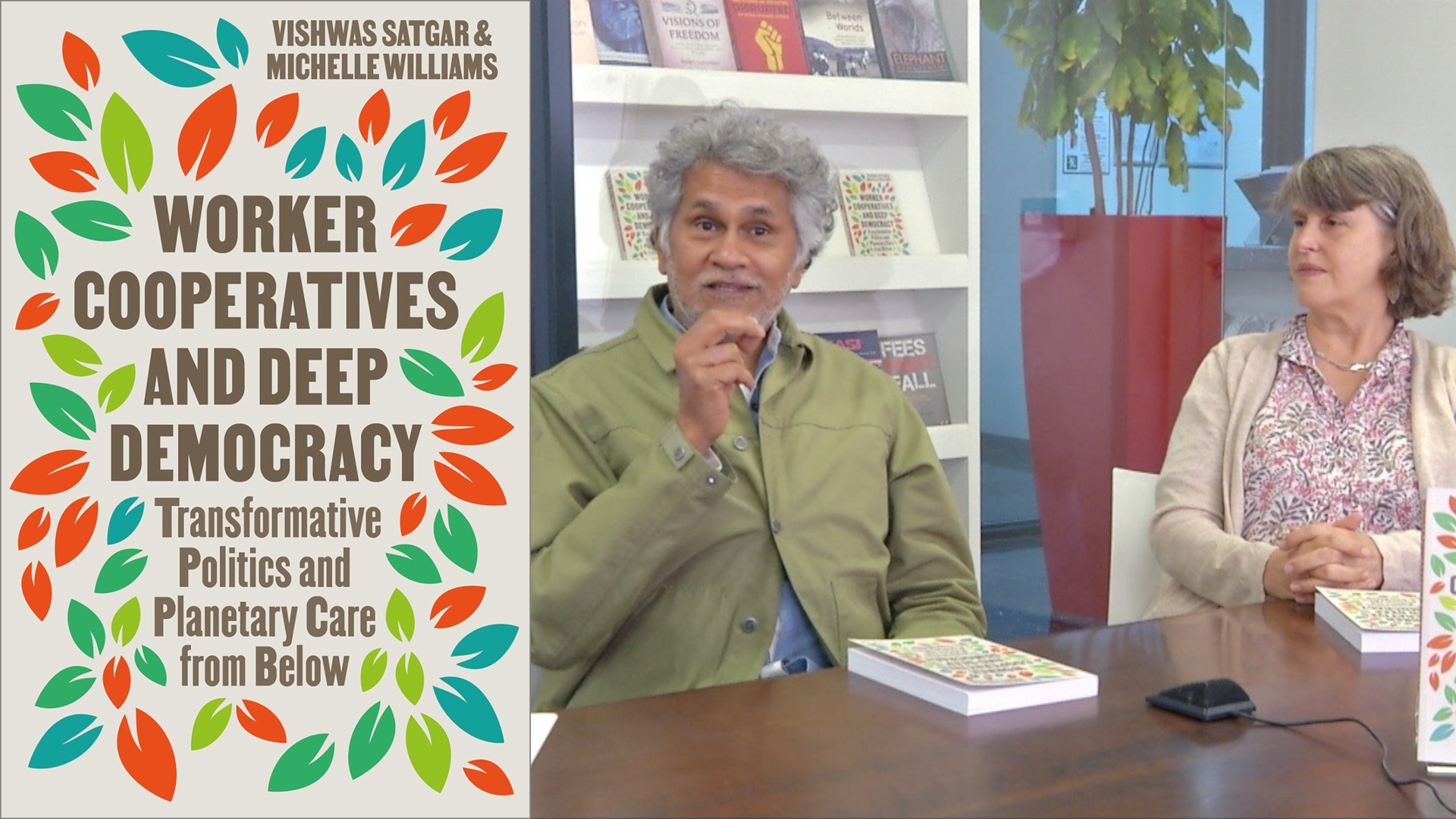
Book Review: Worker Cooperatives and Deep Democracy
by Bernard Marszalek
In their travels [Satgar and Williams] witnessed a diversity of projects that transformed extractive economics by creating a common benefit economics embedded with values of democratic participation, care, and ecological sensitivity. The insights of the participants arose from their real-world experiences, not from ideals promulgated by movements or political parties. A new subjectivity materialized in the daily lives in this way, that is, a new culture formed – one that contended with the old hierarchical and miserabilist one, and superseded it.
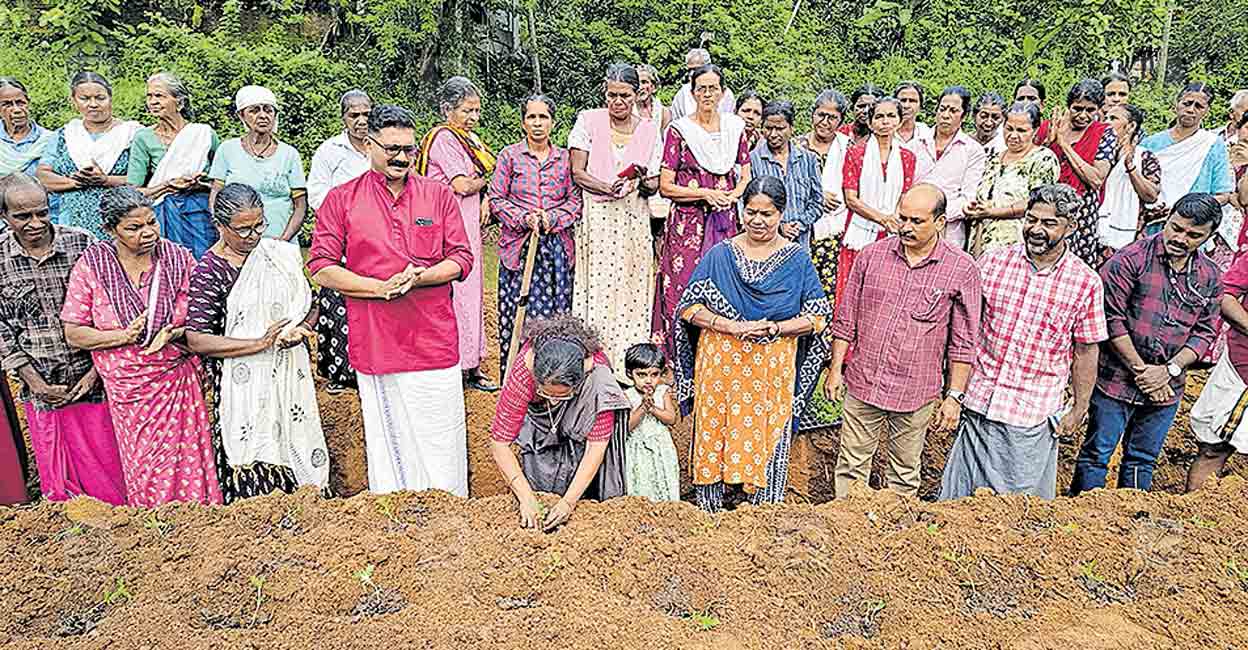
What Kerala’s Member-Owned Institutions Can Teach the World about Social Economics
by P.J. Christabell & Caroline Shenaz Hossein
Informal MOIs, known as sanghas (collectives), along with mutual aid and self-help groups, have been at the core of women’s liberation across caste and class, with innovations such as rotating savings and credit associations (ROSCAs) known as panapayattu or kuri. We argue that localized membership institutions, especially informal MOIs, are at the root of the social and solidarity economy (SSE)—as the Kerala case shows.
New York’s Park Slope Food Coop votes to boycott Israeli goods
Co-op News — Members of Park Slope Food Coop in Brooklyn, New York City, have voted to boycott products from Israel and Israeli settlements in occupied Palestine after a contentious, decade-long debate. Of the co-op’s 17,000 members, 6,753 cast votes on the issue during a three-hour virtual meeting on 27 May, with 4,551 (67%) in favour, 2,083 (31%) against and 119 (2%) abstaining...
Where Do Dairy Cooperatives Stand Amidst Financial Crisis in India’s Cooperative Societies?
Local Samosa — A report by Grain highlights how, after a long-time dominance of the cooperatives, the private companies and premium dairy brands are now commanding a nearly 50% split in organised milk handling. The major reasons cited for their growth include brands focusing heavily on high-margin items like cheese, paneer, probiotic drinks, and yoghurt, which are seeing soaring consumer demand. Post the deregulation in the 1990s, it has been observed that they have also pressured cooperative margins by intensifying competition for raw milk and largely neglecting rural farmer support services, Grain highlights...
Cooperation vs Authoritarianism in Spain
Lauar Flanders' Substack — I first went to the Basque region, during Donald Trump’s first term, to learn about the Mondragón Federation. Created in 1956, it’s now the world’s largest industrial co-op with about 70,000 employees, including thousands overseas. “Business became viewed, for a generation or more, as a place for progressive people to express their values,” explained Fred Freundlich, a professor at Mondragón University, a university funded by the Federation. “It’s not enough on its own as a response to fascism or authoritarianism anywhere, but it is a significant part.”...
A Co-operative Approach to End-of-Life Planning and Care
Co-operatives First — Across Canada, people have created both funeral co-ops and memorial societies, which play different roles in supporting loved ones. A funeral co-op is a member-owned business that operates its own funeral home and provides services. A memorial society negotiates fair funeral pricing with trusted providers and offers tools and guidance. One successful example is the Cooperative Memorial Society in Alberta, which has been around since 1966...

Like what you find on GEO?
Make a Donation Today!
Your tax-deductible contribution ensures that GEO can continue to provide independent grassroots content about the cooperative and solidarity economy movements.
Got something to say?
Let us know. Send your comments, suggestions, rants and article submissions to editors@geo.coop.
Follow us on Social Media
Mastodon: social.coop/@GEO_Collective
BlueSky: @geocollective.bsky.social
FB: facebook.com/GEOCollective
Instagram: instagram.com/grassrootsecon
Our mailing address is:
Grassroots Economic Organizing
P.O. Box 115
Riverdale MD 20738-0115
