
This week, Mari Nishitani writes about the first time bank, Japan's Volunteer Labour Bank. Started by Teruko Mizushima in 1973 as a way to empower women and the elderly, the organization grew to over 200 branches exchanging hundreds of thousands of hours.
Then, Enrique Cal of Uruguay's Federation of Mutual Aid Housing Cooperatives (FUCVAM) shares the history of the federation and the lessons they've learned about successfully organizing cooperatives over the last half century. Enrique addresses how the larger political climate effects co-ops, the place of ideology in co-op organizing, and the many benefits of training children in cooperative practices and values.

Japan's Volunteer Labour Bank
by Mari Nishitani
Mizushima’s Time Bank functioned in neighborhood-based branch units to ensure that each branch kept a small enough scale to maintain the convenience of members to travel to other members to provide or receive services, as well as to maintain the close-knit, trustworthy community. Each branch had staff who helped people with onboarding, troubleshooting, and matching their needs and resources.
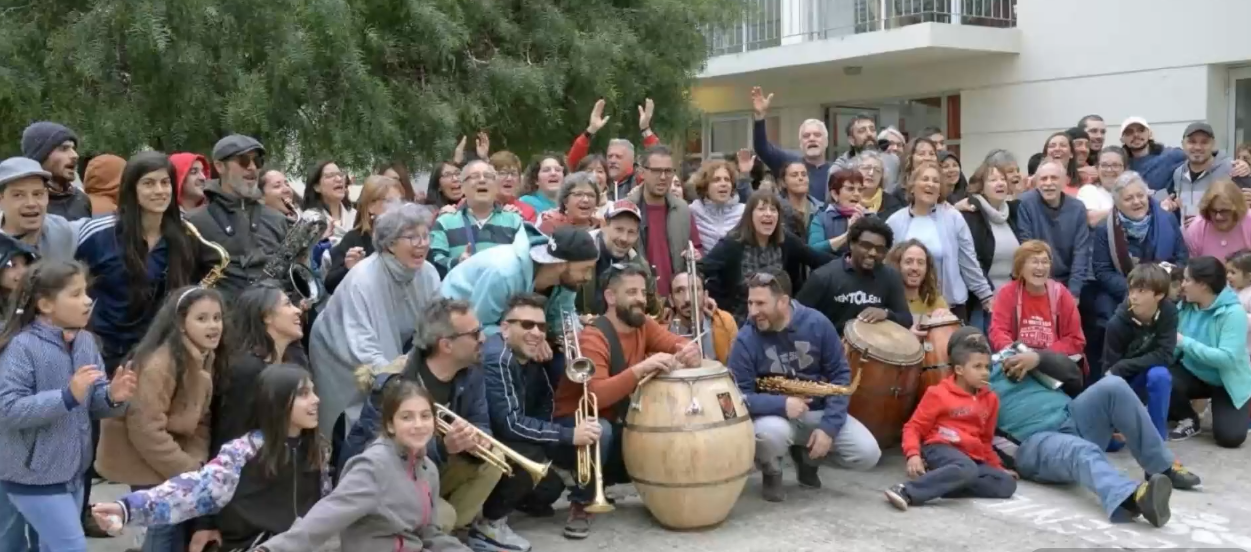
How Uruguay's Co-op Federation Tackles the Country's Housing Shortage
by Cooperative Development Institute
Uruguayan Federation of Mutual Aid Housing Cooperatives (FUCVAM), founded in May 1970, embodies the spirit of community and support. Serving 35,000 families through 760 cooperatives...With a cooperative school for children and numerous consumer, distribution, and worker cooperatives linked to their vision, they are shaping a brighter future.
Land deal aims to boost agricultural co-ops in Jordan
Co-op News — Jordanian agri co-ops will gain access to 4,000 dunams (400 hectares) of land under a new agreement between the Jordan Valley Authority and the Jordan Cooperative Corporation. The agreement marks one of the largest land allocations to co-operatives in Jordan in recent years, following a cabinet decision to designate land in the Ridan al-Aqiliya area of Aqaba Governorate for development projects led by agricultural co-operatives...
A Training with Dean Spade! Working Together Joyfully: Preventing and Addressing Patterns of Resentment in Collaborations
Sustainable Economies Law Center — Many collaborative relationships and group projects, as well as personal relationships, become mired in toxic resentment. In this session, we'll look a what resentment is, why it is so common, how it is formed, how it can masquerade as empowerment, and how we might work through it in order to reconnect to authentic choice in our work and relationships...
10 Lessons We’ve Learned in 10 Years of Creating Co-ops
Co-operatives First — In 2026, Co-operatives First turned 10! And over the past decade, our team has learned a lot about entrepreneurship, policy, governance, and so much more. In that time, we’ve worked with nearly 400 groups and helped create over 160 co-operatives. We’ve helped our clients overcome challenges and learned valuable lessons. We learn from each group we work with and create new tools and resources to help future co-ops learn from their peers. Thanks to all the people who have persevered and created co-ops with us, here are 10 things we’ve learned about the process...

Like what you find on GEO?
Make a Donation Today!
Your tax-deductible contribution ensures that GEO can continue to provide independent grassroots content about the cooperative and solidarity economy movements.
Got something to say?
Let us know. Send your comments, suggestions, rants and article submissions to editors@geo.coop.
Follow us on Social Media
Mastodon: social.coop/@GEO_Collective
BlueSky: @geocollective.bsky.social
FB: facebook.com/GEOCollective
Instagram: instagram.com/grassrootsecon
Our mailing address is:
Grassroots Economic Organizing
P.O. Box 115
Riverdale MD 20738-0115
