
This week, Maimoona Waseem writes about her research with LGBTQ+ staff members at the UK's Equal Care Cooperative. Waseem highligts how the highly personal nature of care work requires a thoughtful approach to balancing the needs, dignity, and wellbeing of both workers and those receiving care.
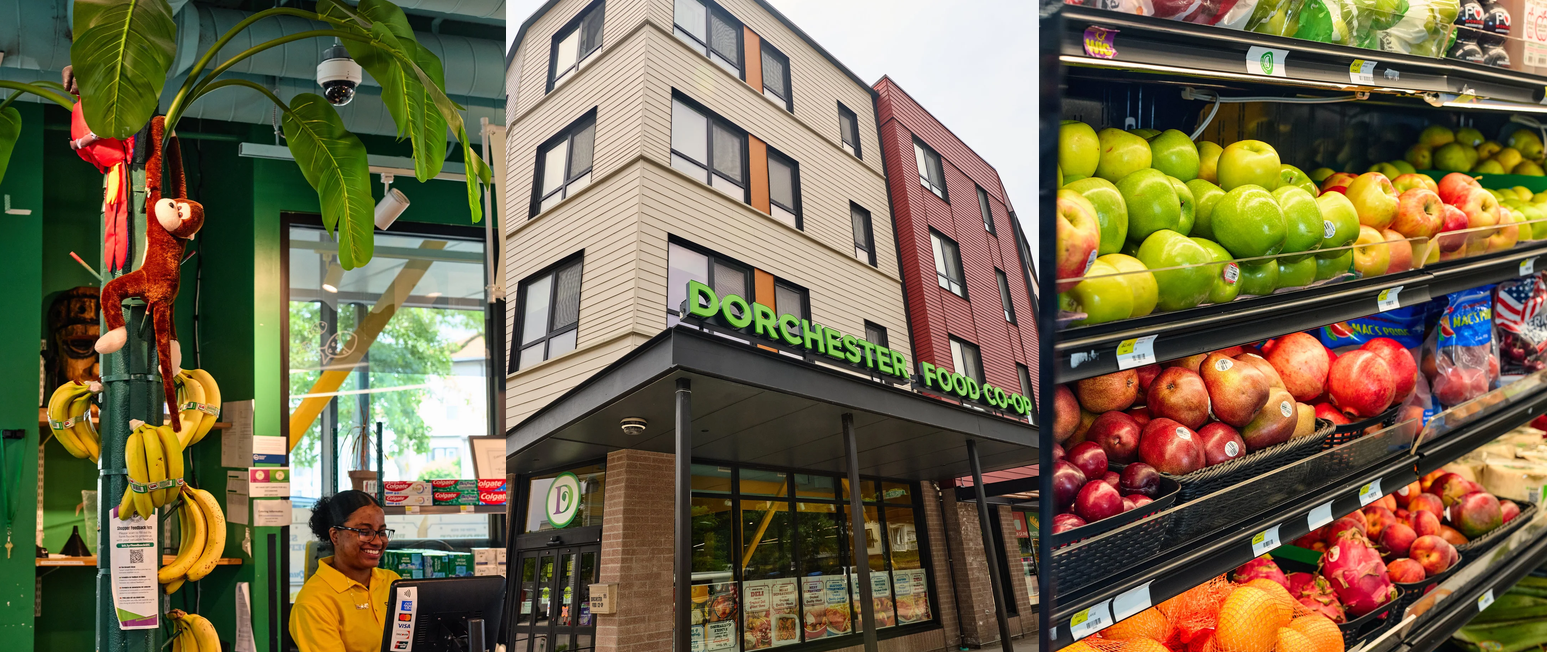
Then, Dorchester Food Co-op GM John Santos talks about their multi-stakeholder model and how a decade of organizing lead to the opening of the Boston co-op, now going on three years old.

Negotiating Identity in Care Work
Experiences of LGBTQ+ Care Workers in Equal Care
by Maimoona Waseem
Through participants' narratives, the article examines how gender identity and sexual orientation shape experiences of care work beyond conventional discussions of workplace discrimination. Rather than presenting identity solely as a source of exclusion, it shows how care workers actively negotiate disclosure, authenticity, emotional wellbeing, and professional boundaries within everyday practice.
Boston's Multi-Stakeholder Food Co-op
by CommonWealth Beacon
The Dorchester Food Co-op is a new community & worker-owned grocery store that aims to make healthy food accessible and advance economic opportunity and neighborhood engagement. General manager John Santos joins CommonWealth's Jennifer Smith to discuss the co-op's origins and business model.
"We never would have come up with this solution if we hadn't been talking to our neighbors"
Working Class Storytelling — People everywhere in Roswell were living doubled up, on each other’s couches, and even in the dry river beds. They’d tried working with the city, but had been told that this was a “charity issue,” not one for the government to figure out. They disagreed, but set out nonetheless to find a solution. And they did. The solution they came up with is one of the most efficient, cost-effective, and locally sustainable concepts I’ve ever heard-- and it’s working...
Review of Cooperatives in the Global Economy
Academia.edu — Cooperatives in the Global Economy is a much-needed series of essays that demonstrate the concrete realities of cooperative economics across the globe. After a foundational chapter on the meaning of cooperative enterprise and its distinction among the endless models and forms of economic activity, the rest of the book essentially looks at geographic profiles. Readers learn about the thriving cooperative movement in Tanzania, India, Philippines, Argentina, South Africa, Armenia, ‘Post-Yugoslav Space’ and others...
Online Workshop: Strengthening Online Communities, July 29th
How To Rise Against Big Tech — Different tools have created different community cultures. Mailing lists invite slower, more reflective exchanges and build up an email archive over time. Forums like Discourse organise conversations by topic and tag, making it normal to return to older threads and turn discussion into shared reference. Real‑time chat tools—Slack, Discord, Telegram, WhatsApp and their open‑source cousins—create fast, conversational spaces where people feel close and responsive, but where decisions and insights often vanish into the scroll. In “Strengthening Online Communities,” an online workshop on Wednesday, July 29th from 3:00–4:30 pm UTC, we’ll explore how to design digital spaces that balance these cultures while aligning with the values at the heart of Rise Against Big Tech: collaboration, transparency, and community control...

Like what you find on GEO?
Make a Donation Today!
Your tax-deductible contribution ensures that GEO can continue to provide independent grassroots content about the cooperative and solidarity economy movements.
Got something to say?
Let us know. Send your comments, suggestions, rants and article submissions to editors@geo.coop.
Follow us on Social Media
Mastodon: social.coop/@GEO_Collective
BlueSky: @geocollective.bsky.social
FB: facebook.com/GEOCollective
Instagram: instagram.com/grassrootsecon
Our mailing address is:
Grassroots Economic Organizing
P.O. Box 115
Riverdale MD 20738-0115
