
This week, Kristin Ford Hurckes of the Univ. of Wisconsin Center for Cooperatives talks about the ways that cooperatives can help address childcare needs, and shares stories of creative ways that communities have used co-ops to provide this necessary service.
Then, Steve Dubb reports on the work of Mondragon's Arizmendiarrieta Social Economy Think Tank (ASETT) to create an international network "centered on cooperation, social economy, and solidarity."
And we have added a transcript to the excellent interview we ran last week, with the EMMA Technology Cooperative.
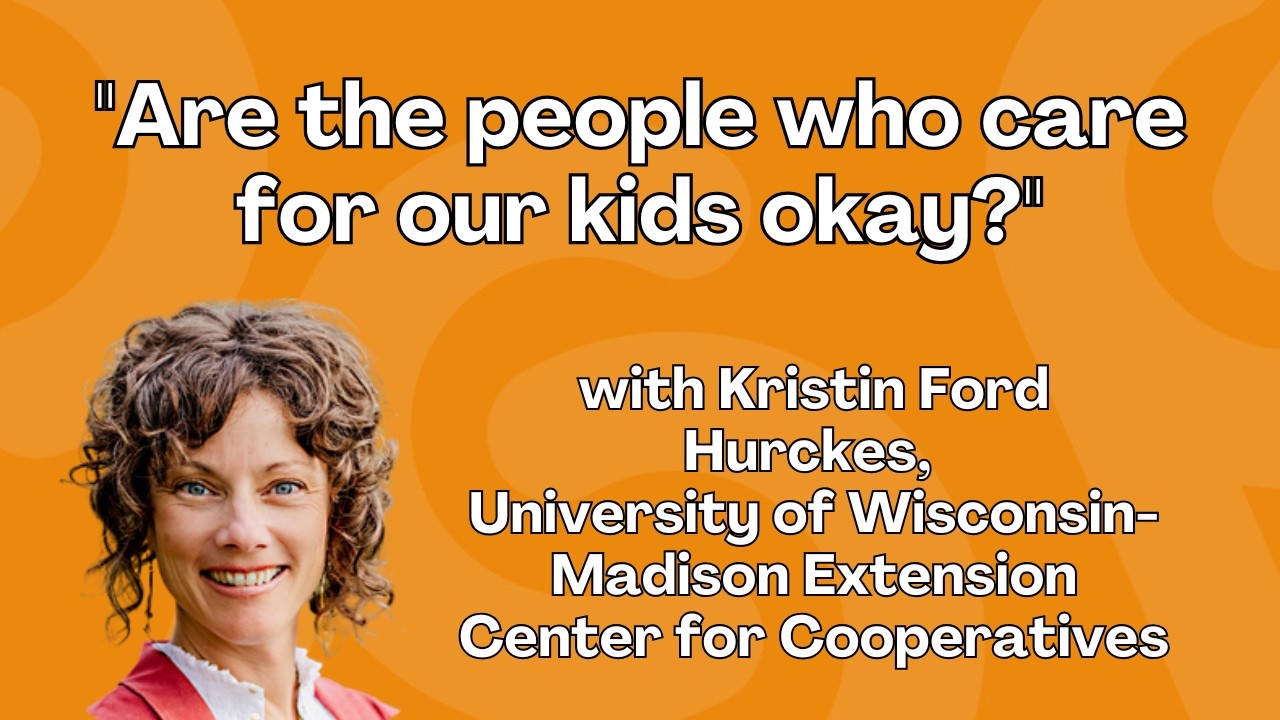
What Co-ops Can (and Can't) Do for Child Care
by Practicing Connection Podcast
When child care is hard to find and harder to afford, some communities aren't waiting for a fix. Kristin Forde Hurckes of the University of Wisconsin-Madison Extension Center for Cooperative explains how cooperative models are helping - and where they hit their limits.
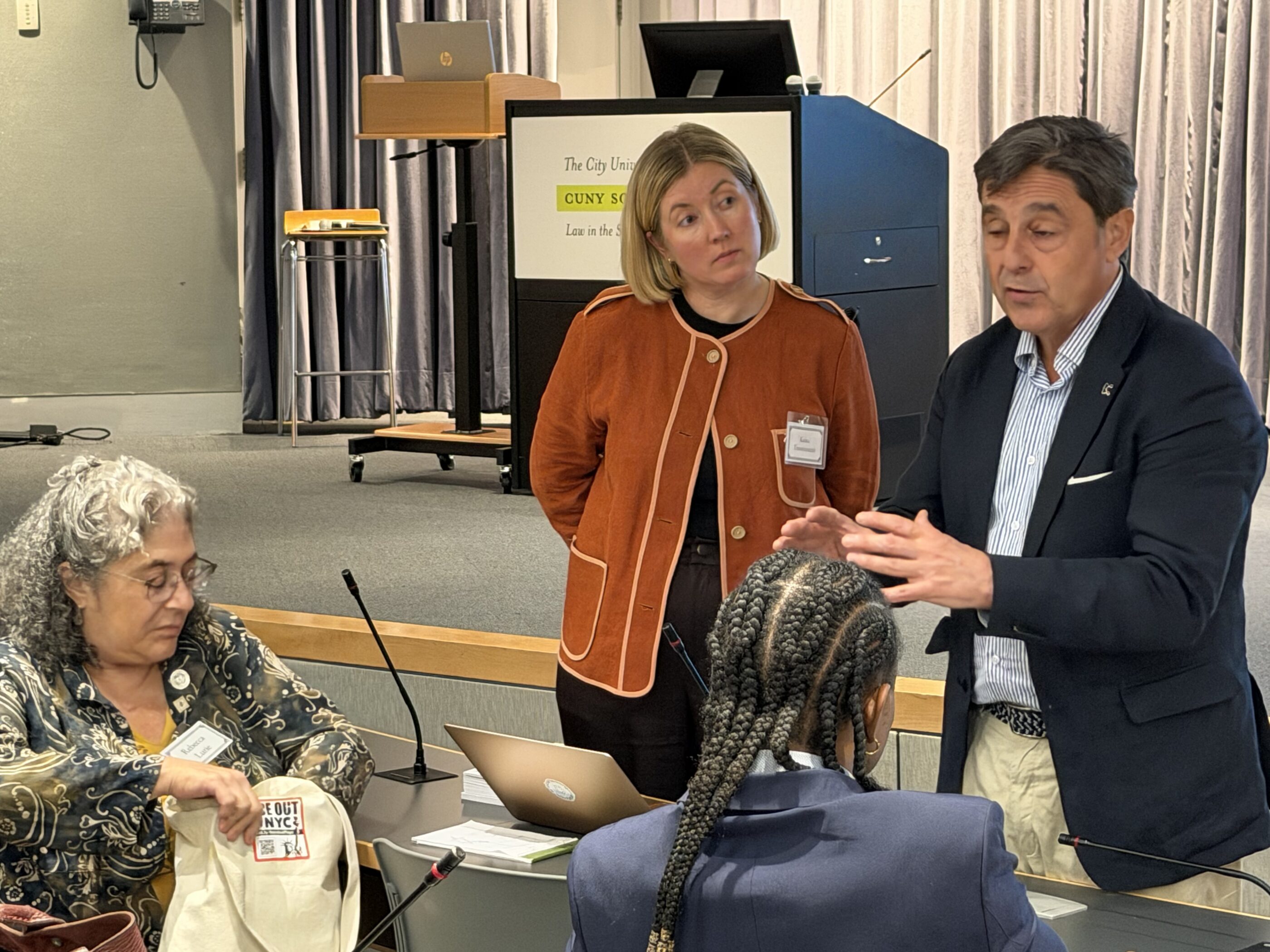
World’s Largest Worker Cooperative Network Seeks New Allies
by Steve Dubb
To date, ASETT has built a broad coalition to advance policies and practices that support businesses motivated by purpose rather than profit. In addition to government allies at the regional and national levels, the coalition includes groups such as Gureak (a Basque organization comprising businesses that seek to employ people with disabilities), the Council of Cooperatives of the Basque Country (Kooperatiben Kontseilua), the Spanish Social Economy Employers’ Confederation (CEPES), and allies from across the world (including the U.S., Latin America, Africa, and Asia).
Igalia and Bocoup: Cooperatives Unite
Igalia — Igalia has grown steadily in recent years, expanding our cooperative with more and more people who care deeply about open source, the web, and collaborative ways of working. This union with the workers of Bocoup continues that trajectory, strengthening our collective with people whose commitments align closely with our own....
Is Pidgin Cooperative’s Worker-Owned Model the Future of Seattle’s Restaurant Industry?
The Stranger — Pidgin was built around a radically simple notion. Instead of a traditional hierarchy model—where workers get hourly wages plus tips, while owners make all the decisions and reap the profits, if indeed there are any—the whole staff is invited to be in the founder’s club. On day one, Pidgin employees are paid $25 per hour and given a clear pathway toward becoming co-owners. After 2,000 hours of service (roughly one year of FTE), workers can purchase a membership share for $1,000 that grants them voting rights in the business, visibility on its finances, and access to profit-sharing. They can invest that $1,000 through a payment plan, if they like, and prelim voting rights are unlocked after an initial investment of $200. The model also includes an equal share of the pooled tips for both front-of-house and back-of-house workers. Currently, Seth says, there are six worker-members at Pidgin, and one who’s on track to becoming the seventh...
Baltimore Ice Cream Shop Where Employees Become Owners
First Alert 6 (Youtube) — At Taharka Brothers in Baltimore, every scoop of ice cream serves a bigger purpose. The company is a worker-owned co-op — no outside investors, just employees who democratically govern the business and share in the profits...
Valley Alliance of Worker Co-operatives 3rd Annual In-Person Event - 9/21
Eventbrite — Please join us! VAWC's 3rd annual in-person event is for worker co-operators, supporters, and anyone interested in worker co-ops to gather and connect with one another. We will have food and beverages from Flat Iron Cooperative including refreshments, chili, co-op coffee, and more...
2026 New York Cooperative Summit
Simpletix — The New York Cooperative Summit is a one-day event brings together New York State cooperative members, leaders, organizers, and allies to share practical tools and strategies for starting, sustaining, and scaling the co-op ecosystem across the state. In 2024, the Summit was held in Syracuse and attracted 100 attendees, and last year the event was in Albany and attracted 125. This year we are planning for up to 150 attendees in Schenectady!...

Like what you find on GEO?
Make a Donation Today!
Your tax-deductible contribution ensures that GEO can continue to provide independent grassroots content about the cooperative and solidarity economy movements.
Got something to say?
Let us know. Send your comments, suggestions, rants and article submissions to editors@geo.coop.
Follow us on Social Media
Mastodon: social.coop/@GEO_Collective
BlueSky: @geocollective.bsky.social
FB: facebook.com/GEOCollective
Instagram: instagram.com/grassrootsecon
Our mailing address is:
Grassroots Economic Organizing
P.O. Box 115
Riverdale MD 20738-0115
