
This week, Shernay Williams of the Institute for Independent Journalists interviews award-winning food writer Soleil Ho about the worker-owned newsroom she co-founded, COYOTE Media Collective.
Then, Amarpal Singh Verma writes about the cooperatives in the North Indian state of Rajasthan that are helping migrant women support themselves through their traditional Sindhi embroidery — escaping the exploitative system of middlemen and exporters who usually capture the lion's share of the value from the women's tireless work.

COYOTE Media’s Soleil Ho on Freelancing and Running a Worker-Owned Newsroom
by The Institute for Independent Journalists
Soleil Ho has always had a lot of irons in the fire. For a decade, they worked as a chef while freelancing as a writer. In 2019, they joined the San Francisco Chronicle, where they served as the paper’s restaurant critic until 2025, nabbing a James Beard Award in the process. These days, when they’re not collaborating with chefs on cookbook projects, they’re helping to run COYOTE Media Collective, a Bay-area-based worker-owned newsroom.
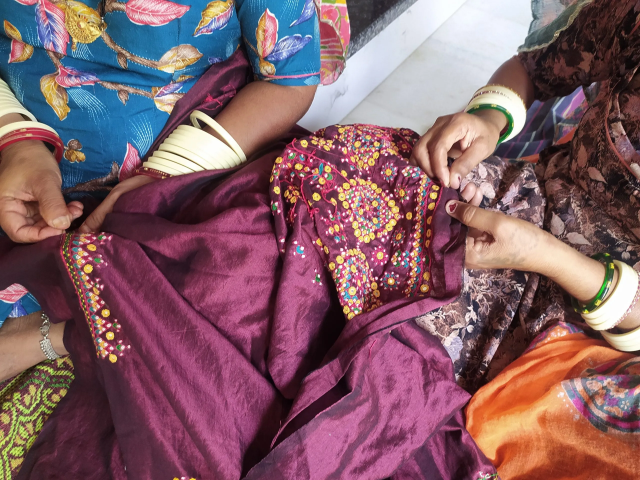
Rajasthan’s Cooperatives are Helping Migrant Women Artisans Escape Decades of Exploitation
by Amarpal Singh Verma
Moomal Meghwal’s family also migrated from Meh ka Tala village in Sindh in 1971. After first living in refugee camps, they settled in Sanwa village. Her mother did embroidery and passed the skill to her daughter. Today, Meghwal’s own daughter also earns around ₹4,000 a month from the work.
“Earlier, the effort was immense, but the earnings were very low,” the 50-year-old craftswoman says. “After associating with SURE, for the first time, it felt like we were getting the true value for our hard work.
Worker-Owner Co-op Model Thrives at Alvarado Street Bakery
Edible Marin & Wine Country — The sun rises over Petaluma’s hills as Calderon joins the team mixing dough and sending fluffy golden rings down the line to be packaged. He’s been working on the production floor for seven years. At most bakeries in the country it’s likely he would be making around $12 an hour. But his salary hovers around $60,000 per year, on top of stellar health insurance, a 401(k) and a share of the bakery’s profits...
Cooperative Childcare Solutions Webinars
University of Wisconsin Center for Cooperatives — The childcare crisis is straining rural communities — creating business disruptions, reducing access to affordable quality care, and causing burnout for childcare workers. Join the University of Wisconsin Center for Cooperatives and Cooperative Development Services for a webinar on the childcare crisis. Drawing on eight months of firsthand research, this presentation will share ways rural communities and employers have addressed childcare gaps through collaboration, advocacy, and the cooperative model...

Like what you find on GEO?
Make a Donation Today!
Your tax-deductible contribution ensures that GEO can continue to provide independent grassroots content about the cooperative and solidarity economy movements.
Got something to say?
Let us know. Send your comments, suggestions, rants and article submissions to editors@geo.coop.
Follow us on Social Media
Mastodon: social.coop/@GEO_Collective
BlueSky: @geocollective.bsky.social
FB: facebook.com/GEOCollective
Instagram: instagram.com/grassrootsecon
Our mailing address is:
Grassroots Economic Organizing
P.O. Box 115
Riverdale MD 20738-0115
