
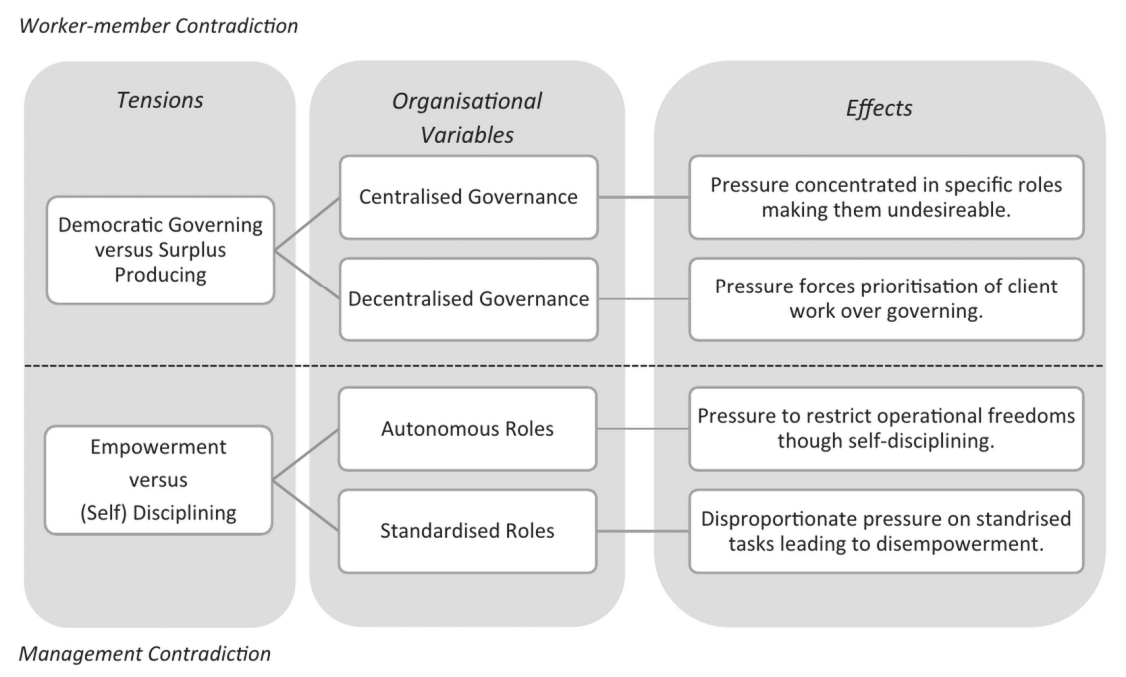
This week, we have an interesting paper from Nicos Moushouttas on the organizational tensions faced by worker cooperatives, and how they are addressed differently than in traditional businesses. Moushouttas interviewed cooperators and examined documents from five UK worker cooperatives, ranging in size from 11 to 295 members.
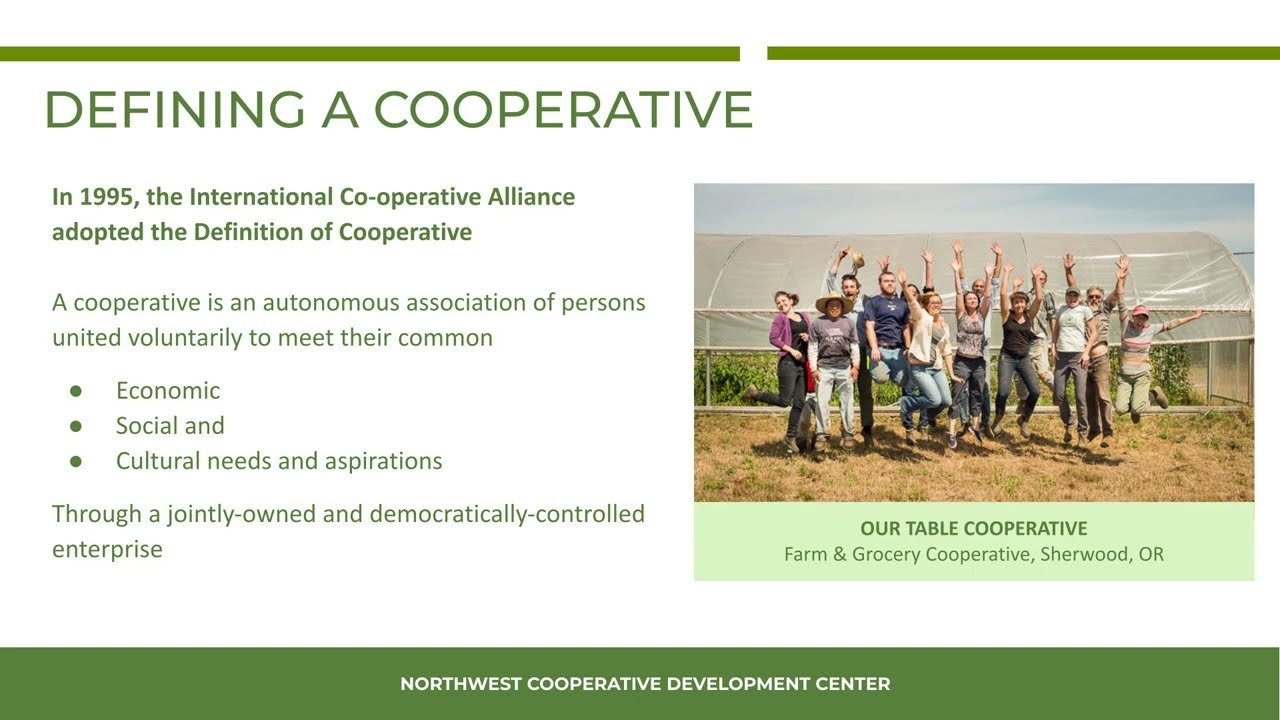
Then, the Northwest Cooperative Development Center presents a series of webinars on the process of converting a business to a worker cooperative. This week, we're sharing the first two sessions. While the information in the introductory webinar may be old hat to most readers, the second session, which presents first hand accounts from two co-op conversions, is worth a watch by everyone.
Organisational Tensions in Worker Cooperatives
by Nicos Moushouttas
In Vegetarian Wholefoods, where the majority of operations were warehouse-based, labour was divided into simple, relatively repetitive tasks, accompanied by multi-skilling and role rotation. Under this type of division of labour, which left little room for operational autonomy, pressure to perform in a specific time-efficient manner was imposed through performance targets by the committee in consultation with managers. This performance-driven work intensification was particularly evident in manual labour jobs because they constituted the bulk of operational activities and because they were easier to monitor and measure...Although there were multiple suggestions and trials to impose KPI targets for marketing and administrative roles, the nature of those roles made it difficult to quantify and measure their performance. As such, the pressure to perform was disproportionately affecting labour-intensive roles. Worker-members performing those roles had, on paper, the same status and power as any other worker-member; however, the work intensification and knowing that their performance was being monitored made it difficult to realise that power.
Exploring the Conversion Process
by Northwest Cooperative Development Center
The Northwest Cooperative Development Center (NWCDC) recently released a series of six videos on the process of converting a business to a cooperative. Below are sessions one and two, which cover the basics of conversion, and present two case studies: A1 DesignBuild, and MSA Environmental.
Detroit’s first Black-led grocery store sends out a fundraising SOS amid financial struggles
Detroit Metro Times — While it has recorded $3 million in sales annually, the co-op is still struggling as it has been beset by issues ranging from crippling food inflation to the loss of a full-time general manager to a broad misunderstanding of the co-op model. To right the ship, the Detroit People’s Food Co-op has launched a three-pronged fundraising campaign and began making operational changes. Some of the store’s shelves have sat a bit empty, and they need to address that issue stat, while also planning for long-term stability. Read on for details on how to support it, but first a quick refresher on the cooperative model, and why it is so vital...
A Better Handmade Marketplace Launches: Beta is Over!
Artisans Cooperative — Our 2023 Marketplace Tech Plan utilized hosted e-commerce to get our marketplace launched in only seven months, using off-the-shelf technology to get us to revenue as fast as possible. Exactly three years later, today we launched A better handmade marketplace. Instead of renting our marketplace and functionality from corporations, we own it. We purchased a copy of the code, run it on a server hosted by a fellow cooperative (MayFirst), and can make feature improvements and bug fixes ourselves...

Like what you find on GEO?
Make a Donation Today!
Your tax-deductible contribution ensures that GEO can continue to provide independent grassroots content about the cooperative and solidarity economy movements.
Got something to say?
Let us know. Send your comments, suggestions, rants and article submissions to editors@geo.coop.
Follow us on Social Media
Mastodon: social.coop/@GEO_Collective
BlueSky: @geocollective.bsky.social
FB: facebook.com/GEOCollective
Instagram: instagram.com/grassrootsecon
Our mailing address is:
Grassroots Economic Organizing
P.O. Box 115
Riverdale MD 20738-0115
